


Bubble Pop: Wild Rescue
4.44.29K Reviews
App Specs
- Version
- 1.9.0
- Updated On
- License
- Free
- Downloads
- 1,000,000+
- Developer
- Gimica GmbH
- Categories
- Puzzle
- Platform
- Android, iOS
Screenshots
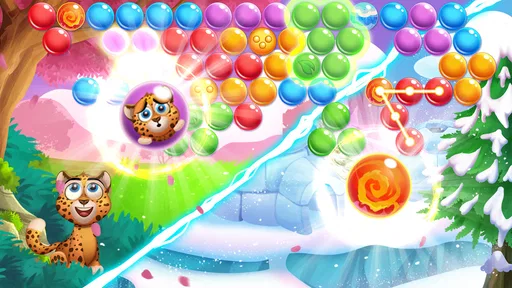
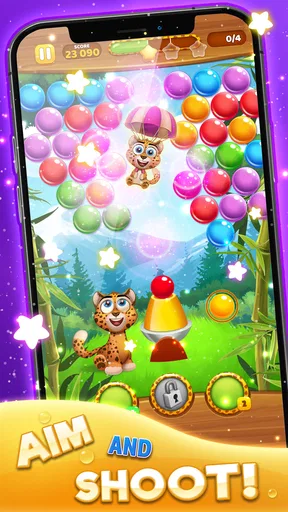
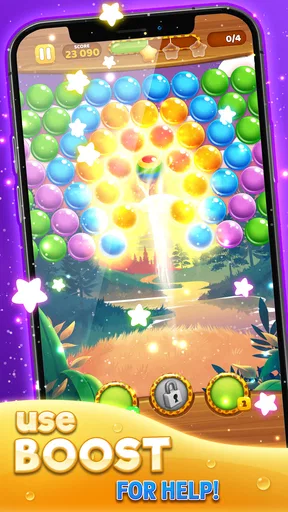
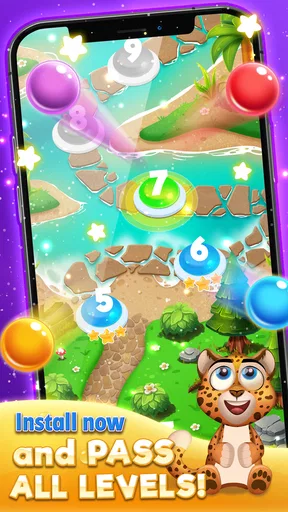
 Analysis by AppCompare
I found Bubble Pop: Wild Rescue easy to understand within seconds, but not so shallow that the first few sessions felt disposable. It is a free puzzle game from Gimica GmbH built around matching and clearing bubbles while helping animals. My overall view is simple: it works best as a relaxed, short-session game for people who enjoy familiar bubble-shooter rules with a light rescue theme, rather than as a demanding strategy experience.
That distinction matters. The game is pleasant when I want something I can pick up without learning a complicated system, especially during a short break or while waiting for an appointment. At the same time, players who expect deep planning, a strong story, or a completely fresh take on the genre may find its basic formula limited. I would recommend it, but with realistic expectations: its appeal comes from accessible play, quick feedback, and a friendly presentation, not from reinventing puzzle games.
How the bubble-shooter format feels in everyday play
The central appeal is the familiar bubble-shooter rhythm. I look at the arrangement, choose a color, aim, and try to create useful matches rather than simply firing at the most obvious group. That makes each move readable, which is one reason the game is suitable for casual players. There is very little friction between opening a level and understanding what I am supposed to do.
What I like most is that the game gives ordinary idle moments a clear shape. If I have only a few minutes, I can play without committing to a long campaign or remembering a complicated set of controls. A realistic use case is a commute with intermittent attention: I can finish a small piece of progress, put the phone away, and return later without feeling that I have abandoned a large strategy plan.
The animal-rescue framing gives the familiar mechanic a little more personality than a completely abstract board would have. It is not enough on its own to transform the genre, but it does make the goal feel warmer. For younger players and families, that presentation may be more inviting than a purely competitive or jewel-themed alternative. The Everyone content rating also makes it a broadly approachable choice for shared devices and mixed-age households.
Still, the basic loop remains recognizable. If you have played several bubble shooters, you will understand the appeal immediately, but you will also recognize the risk: once the novelty of the setting fades, the quality of the level design and the fairness of progression become much more important. In my experience, this is the kind of game I judge one session at a time. A good session feels satisfying; a repetitive one is easy to leave behind.
Where the game earns its place
The strongest evidence in its favor is accessibility. Bubble Pop: Wild Rescue does not ask me to study a manual, build a character, or memorize an elaborate menu structure before I can enjoy it. That makes it a practical recommendation for someone who wants a puzzle game rather than a second job. The controls are naturally suited to a touchscreen, and the bubble-shooter format remains understandable even when I return after a break.
Worth Reading Before You Choose

EA SPORTS FC Mobile 26 Is a Bigger Football Game, but It Takes Time

Flipboard Shows What News Apps Must Do Beyond the Feed

Switching to Android Auto Means Rethinking Your Driving Routine

Google Calendar Makes a Crowded Week Easier to Manage

Ludo King Makes the Most of the Minutes Between Plans

Baby Panda World Brings Quick Play to Modern Phones, but Its Game Library Feels Busy
Its broad audience is reflected in its reach: the game has passed one million installs and holds an average rating of 4.4. Those figures do not prove that every player will enjoy it, but they do suggest that its straightforward design connects with a large casual audience. I would treat that popularity as confirmation of its accessibility, not as a reason to overlook its limitations.
Another strength is the way short-term decisions can still matter. A shot that clears a small cluster may be less useful than one that supports a larger chain or opens a better angle. The best way to play is not to fire as quickly as possible. I get better results when I first scan for bubbles that are holding up a larger section, then consider whether a banked shot or a higher attachment point will create a more valuable collapse.
That is a small but important tip for new players: look beyond the nearest matching color. In many bubble shooters, the most rewarding move is the one that changes the structure of the board, not the one that removes the largest visible group immediately. I also try to avoid spending a useful shot just to tidy the lower part of the screen when a more strategic opening is available above it.
The animal theme also helps with motivation during ordinary progression. A purely abstract puzzle can start to feel like a sequence of interchangeable boards. Here, the rescue idea gives the player a reason to care about moving forward, even if that reason is light rather than story-heavy. I would not buy the game expecting a detailed narrative adventure, but I do think the theme makes casual progress feel less mechanical.
The small decisions that improve a session
My most useful habit is to slow down before every shot, especially when the board offers more than one possible match. Bubble shooters reward planning one or two moves ahead, but they punish overthinking too. I usually identify the most valuable obstruction, check whether the shot can reach it cleanly, and only then commit. This keeps the game relaxing while avoiding careless moves.
A second practical insight is to treat difficult moments as resource-management problems rather than aiming problems alone. If a level begins to feel blocked, repeatedly making safe-looking matches can leave the board in a worse shape. I prefer to preserve opportunities that can connect colors or remove a supporting cluster. The trade-off is that a risky angle may fail, but a sequence of harmless shots may also slowly reduce the number of useful options.
Players who use the game as a quick break should also decide in advance whether they want a calm or goal-oriented session. When I play casually, I focus on learning the board and enjoying the visual feedback. When I am trying to advance, I spend more time considering the order of shots and avoid tapping simply because a match is available. That change in mindset makes the same basic mechanic feel more deliberate without turning it into a complicated strategy title.
One further advantage is that it does not require the kind of sustained concentration demanded by a large competitive puzzle game. I can enjoy it while tired, provided I accept that a few careless shots may cost progress. That makes it suitable for winding down, but it also means players looking for intense mental pressure may find the experience too gentle.
The meaningful weakness: familiarity can become repetition
The main weakness is not that the game is confusing; it is almost the opposite. Its clarity comes from using a formula many players already know, and that familiarity can eventually make the experience feel predictable. The rescue theme adds charm, but it does not automatically solve the genre’s repetition problem. If your enjoyment depends on constant mechanical surprises, this may not hold your attention for long.
I also think the game is less suitable for players who dislike interruptions to a simple puzzle flow. Free-to-play puzzle games commonly need some form of monetization, and this one includes in-app purchases ranging from $2.49 to $4.99 per item. That does not make the game poor value by itself, but it is a reminder to approach the experience as a free casual title rather than an entirely frictionless premium game.
My advice is to avoid making a purchase simply because one difficult board has become irritating. First, replay the situation mentally and ask whether the problem was a poor shot order, an unfavorable angle, or a board that genuinely left few options. Spending can make a stuck moment feel easier, but it can also remove the satisfaction of solving the puzzle through better planning. For me, the game is most enjoyable when purchases remain optional rather than becoming part of the routine.
That monetization trade-off is especially relevant for parents. The Everyone rating makes the content broadly accessible, but an age rating does not replace sensible supervision of purchases on a shared device. I would set the appropriate device controls before handing the game to a child, not because the puzzle itself is unsuitable, but because free games with optional items deserve the same basic spending safeguards as any other mobile entertainment.
There is also a difference between being easy to learn and being easy to master. New players may initially make quick progress because the rules are so clear. Later, success depends more on patience, angle selection, and recognizing which bubbles are structurally important. If a player expects every level to be solved by matching whatever color is closest, frustration is likely. The game rewards observation, but it does not always advertise that lesson directly.
Who should play it, and who should skip it
I see Bubble Pop: Wild Rescue as a strong fit for casual puzzle fans who want a familiar touchscreen game with a friendly objective. It is especially suitable for short sessions, relaxed play, and players who prefer visual matching over word puzzles, complex logic grids, or competitive timers. Someone new to bubble shooters can understand the basic idea quickly, while an experienced player can still enjoy optimizing shots and looking for better board-clearing sequences.
It may also work well for families choosing one uncomplicated game to keep on a phone or tablet. The animal-rescue framing is more approachable than a harsh combat setting, and the Everyone rating supports its broad positioning. I would still explain the purchase controls to younger players and make clear that progress does not need to be rushed.
On the other hand, I would skip it if you want a premium puzzle experience with no monetization considerations, a substantial story, or a deep competitive ladder. I would also choose a different option if you have already grown tired of bubble-shooter mechanics. A minimalist logic game may be better for someone who wants every move to be a carefully constructed deduction, while a larger strategy game will offer more long-term systems and meaningful planning outside individual levels.
The game is also not my first recommendation for someone seeking a completely screen-free way to relax. Its appeal depends on visual focus and repeated aiming, so it is better for a short digital break than for listeners who want something playable while doing another task. Although the controls are simple, good decisions still require looking closely at the arrangement.
For a new player, I would begin by treating the first sessions as practice in board reading rather than as a race. Check the upper structure before firing, favor moves that open access to larger clusters, and do not assume that the nearest match is the best match. If a level feels unfair, take a pause instead of immediately reaching for an item. Returning with a fresh view often reveals a better sequence.
Practical details before installing
The game is free to download, which makes it easy to test without committing money at the start. It was released on October 7, 2022, and the current version is 1.9.0. It requires Android 7.0 or later, so anyone using an older Android device should check compatibility before planning to play. These details make it a relatively straightforward option for many existing Android users, though the experience will still depend on the age and performance of the individual device.
Its store presence is substantial, with around 147 thousand ratings and roughly 4.3 thousand written reviews. I would read that as evidence that the game has generated sustained attention, while remembering that a numerical average cannot tell me whether the specific style suits my preferences. A player who loves simple matching may rate it highly; someone seeking novelty may not.
One thing I appreciate about this kind of game is that the entry cost is low in both money and learning time. I can install it, understand the objective, and decide fairly quickly whether the rhythm works for me. That makes it easier to recommend as a trial than a paid puzzle title whose value depends on a longer campaign. The trade-off is that free access comes with the possibility of purchase prompts and a progression structure designed for repeated play.
Before installing, I would ask myself one practical question: do I want a gentle game I can revisit, or a puzzle that constantly challenges me with unfamiliar rules? Bubble Pop: Wild Rescue is much closer to the first option. That is a strength when I need something dependable, but a weakness when I am actively searching for surprise.
My final verdict after weighing the trade-offs
Bubble Pop: Wild Rescue succeeds because it understands what makes bubble shooters immediately enjoyable. The controls are approachable, the animal-rescue setting gives the familiar activity a pleasant identity, and the short-session format fits real everyday use. I can recommend it to a friend who wants a free puzzle game for waiting rooms, quiet evenings, or brief breaks during the day.
My recommendation comes with a clear condition: enjoy it for its relaxed, recognizable loop rather than expecting a major genre breakthrough. The game’s best moments come from spotting a smart angle, opening a blocked section, and watching a carefully planned shot change the board. Its weakest moments arrive when the same pattern begins to feel routine or when optional purchases seem tempting after a frustrating attempt.
For me, the right way to approach it is as a light companion game. Play slowly enough to notice the board, preserve useful opportunities, and decide beforehand whether you are willing to spend anything. If that sounds appealing, the free entry point and broad age rating make it easy to try. If you need deeper strategy, a richer narrative, or a completely purchase-free experience, another puzzle category will probably serve you better.
My verdict: a welcoming and convenient bubble-shooter for casual players, strongest in short sessions and weakest when repetition or monetization becomes more noticeable. I would keep it installed for relaxed play, but I would not present it as the definitive choice for every puzzle fan.
Pros
- Simple tap-to-pop controls are easy for players of almost any age.
- Rescue-themed levels give the classic bubble-shooter format extra purpose.
- Short stages work well for quick sessions during commutes or breaks.
- Bright visuals and cheerful effects make the game inviting to casual players.
- Progression offers a relaxing alternative to more competitive puzzle games.
Cons
- Some levels may rely heavily on luck rather than careful planning.
- Difficulty can rise sharply after the early
- beginner-friendly stages.
- Repeated bubble-popping mechanics may feel monotonous over longer sessions.
- Energy or waiting systems may limit uninterrupted play.
- Ads or optional purchases can affect the pace of free gameplay.
FAQs for Bubble Pop: Wild Rescue
What is Bubble Pop: Wild Rescue?
Bubble Pop: Wild Rescue is a casual bubble-shooting puzzle game with a colorful wildlife rescue theme. Players aim and match bubbles to clear levels, complete objectives, and help adorable animals along the way. The gameplay is easy to understand, but later stages introduce more challenging layouts, limited shots, obstacles, and targets that require careful planning rather than simply tapping as quickly as possible.
How do you play Bubble Pop: Wild Rescue?
The main objective is to shoot bubbles toward groups of bubbles with the same color. Matching three or more usually clears them from the board, while larger combinations can create useful chain reactions. Each level may include a different goal, such as removing specific bubbles, rescuing animals, or reaching a target score. Players should consider bank shots and conserve moves when the number of shots is limited.
Is Bubble Pop: Wild Rescue free to download and play?
Bubble Pop: Wild Rescue is generally presented as a free-to-download game, allowing users to begin playing without an upfront purchase. However, free games of this type may include optional in-app purchases for boosters, extra moves, lives, or other conveniences. Advertising may also appear between levels or during certain actions. Before downloading, check the store listing and your device’s purchase settings for current details.
Does Bubble Pop: Wild Rescue require an internet connection?
The basic bubble-popping levels may work without a constant internet connection, which can make the game convenient for short offline sessions. Nevertheless, some features may depend on connectivity, including advertisements, cloud saving, events, updates, rewards, or purchases. Offline behavior can also vary between Android and iOS versions. It is best to launch the game once online and confirm which features remain available without a connection.
Is Bubble Pop: Wild Rescue suitable for children?
Bubble Pop: Wild Rescue uses simple controls, friendly animal characters, and non-violent puzzle gameplay, making it approachable for many younger players. Parents should still review the age rating, advertising content, privacy information, and available in-app purchases before allowing children to play. If the game includes optional purchases or external links, parental controls and purchase restrictions are recommended to prevent accidental spending.


